Hey guys, SamacharDesi Editorial Team here, your trusted source for cutting-edge market insights and practical financial guidance. As we navigate the dynamic markets of 2026, finding reliable, systematic strategies is more crucial than ever. Today, we’re diving deep into one of the most popular and potentially profitable day trading strategies: the Opening Range Breakout (ORB) strategy. This isn’t just about theory; it’s about providing you with verified calculations, systematic market guidelines, and robust risk disclosures to empower your personal finance decisions.
- Understanding the Opening Range Breakout (ORB) Strategy for 2026
- Systematic Guidelines: How to Trade ORB Successfully
- 1. Defining the Opening Range (OR)
- 2. Setting Up Your Entry Points
- 3. Implementing Robust Risk Management: The Stop-Loss
- 4. Defining Profit Targets
- 5. Volume Confirmation
- Crucial Risk Disclosures and Management Strategies
- Capital Allocation and Position Sizing
- Understanding and Filtering False Breakouts
- The Importance of Backtesting and Simulation
- Emotional Discipline
- Advanced Considerations for 2026 Traders
- Conclusion: Your Path to ORB Success
Ready to unlock the potential of the market’s first hour? Let’s get started!
Understanding the Opening Range Breakout (ORB) Strategy for 2026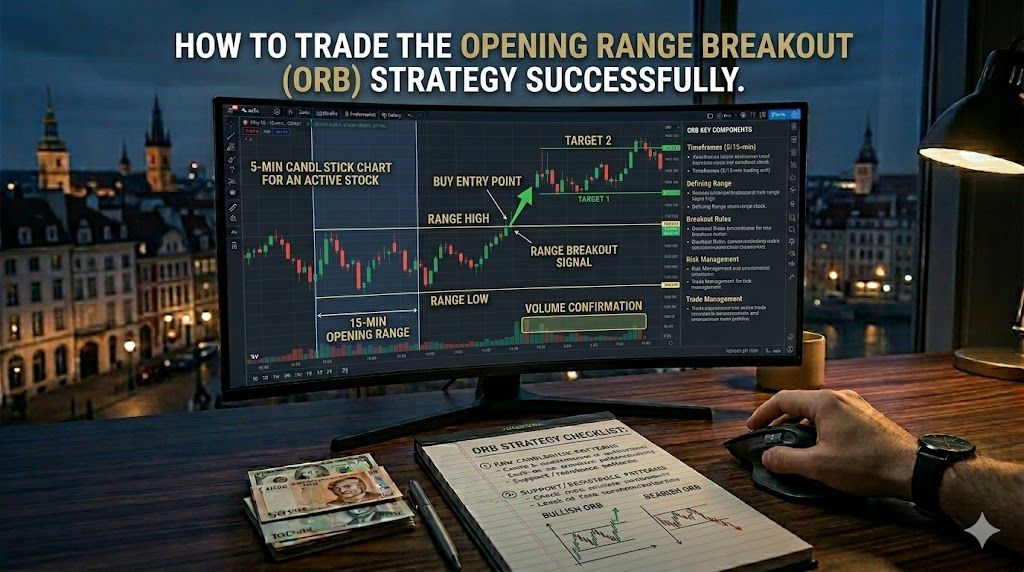
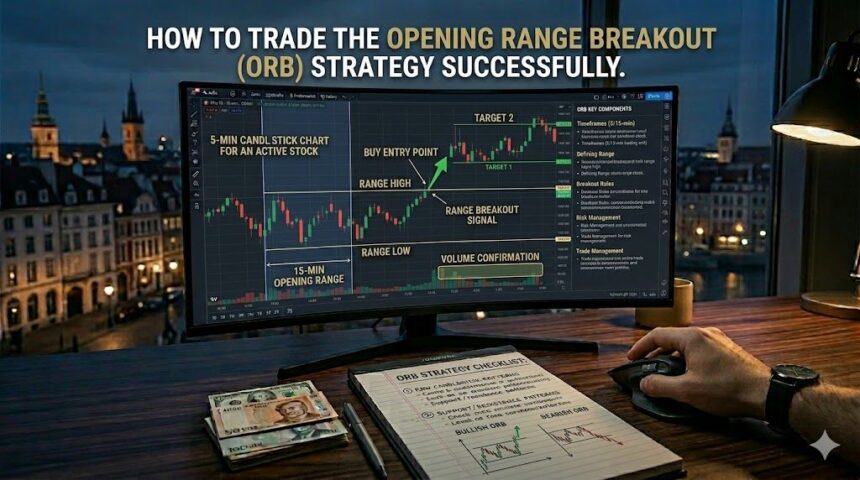
The Opening Range Breakout (ORB) strategy capitalizes on the initial price action of a trading session. The “Opening Range” is typically defined as the price high and low established within a specific timeframe after the market opens – commonly the first 15, 30, or 60 minutes. The core premise is simple: when the price decisively breaks above the high or below the low of this established range, it often signals the potential direction for a significant move for the rest of the day.
In 2026, with advanced algorithmic trading and real-time data accessibility, identifying and reacting to these early momentum shifts can offer significant opportunities. The ORB strategy is particularly appealing because it provides clear entry and exit points, making it highly systematic and less susceptible to subjective interpretations once parameters are defined.
Why the ORB Strategy Remains Relevant in 2026
Despite the proliferation of complex algorithms and high-frequency trading, the ORB strategy continues to be a powerful tool for several reasons:
- Predictive Power: The opening hour often sees the highest volume and participation from institutional traders, whose initial positioning can dictate the day’s trend.
- Clear Structure: It offers objective entry and exit strategy points, reducing emotional trading errors.
- Adaptability: While traditionally applied to stocks, it’s increasingly effective across other asset classes like futures, commodities, and even highly liquid cryptocurrencies, provided the market conditions are suitable.
- Technology Integration: Modern trading platforms in 2026 offer sophisticated charting tools and automated order execution, making ORB implementation smoother and faster.
Systematic Guidelines: How to Trade ORB Successfully
Successfully implementing the ORB strategy requires discipline, precise execution, and a solid understanding of its components. Here are the verified steps and considerations:
1. Defining the Opening Range (OR)
- Choose your timeframe: The most common are the first 15, 30, or 60 minutes. Shorter ranges (15-30 mins) tend to generate more signals but can be prone to false breakouts. Longer ranges (60 mins) offer more robust signals but fewer opportunities. For active day trading, 15-30 minutes is often preferred.
- Identify the High and Low: Once your chosen timeframe elapses, mark the highest price (OR High) and the lowest price (OR Low) achieved during that period.
2. Setting Up Your Entry Points
- Long Entry: Place a buy stop order slightly above the OR High. A common practice is to place it 1-2 ticks or a small percentage (e.g., 0.1%) above the high to confirm the breakout and avoid premature entries. This is your entry point.
- Short Entry: Place a sell stop order slightly below the OR Low. Similarly, 1-2 ticks or a small percentage below the low for confirmation.
3. Implementing Robust Risk Management: The Stop-Loss
This is arguably the most critical component. Never trade ORB without a defined stop-loss:
- For Long Trades: Your stop-loss should be placed just below the OR Low. If the price breaks the OR High and then reverses to break the OR Low, the trade is likely failing, and you need to exit to limit losses.
- For Short Trades: Your stop-loss should be placed just above the OR High.
- Dynamic Stop-Losses: Advanced traders in 2026 might use trailing stops or move their stop-loss to breakeven once the trade moves favorably, protecting capital.
4. Defining Profit Targets
Setting realistic profit targets is crucial for sustained success:
- Fixed Risk-Reward Ratio: A common strategy is to aim for a 1:1, 1:2, or 1:3 risk-reward ratio. If your risk (distance from entry to stop-loss) is $X, you’d aim for a profit of $X, $2X, or $3X.
- Previous Support/Resistance Levels: Identify significant support or resistance levels from previous trading days or intraday charts as potential targets.
- Percentage Targets: For highly volatile assets, a fixed percentage target (e.g., 0.5% or 1% gain) might be appropriate.
- Partial Profits: Consider taking partial profits at your first target and letting the rest run with a trailing stop-loss.
5. Volume Confirmation
In 2026, with vast data availability, always look for volume confirmation. A true breakout should ideally be accompanied by significantly higher than average volume. Low volume breakouts are often false breakouts and should be viewed with skepticism.
Here’s a quick summary table for the ORB strategy specifications:
| Parameter | Description / Guideline | 2026 Consideration |
|---|---|---|
| Opening Range (OR) Timeframe | Typically 15, 30, or 60 minutes from market open. | Shorter ORs for higher volatility assets; consider pre-market data integration. |
| Entry Point | Buy Stop 1-2 ticks above OR High (for long); Sell Stop 1-2 ticks below OR Low (for short). | Utilize advanced order types (e.g., OCO – One Cancels Other) for simultaneous entry/stop. |
| Stop-Loss Placement | Below OR Low for long trades; Above OR High for short trades. | Strict adherence. Consider dynamic stop-loss automation via broker APIs. |
| Profit Target | Minimum 1:1 Risk-Reward, up to 1:3 or more. Utilize previous S/R levels. | Leverage AI-driven predictive analytics for potential S/R levels. |
| Volume Confirmation | Breakout should be accompanied by above-average volume. | Real-time volume analysis tools are standard; look for institutional activity footprints. |
| Suitable Market Conditions | Markets with clear trends, moderate to high market volatility. Avoid choppy markets. | AI-powered market sentiment and volatility indicators can aid filtering. |
Crucial Risk Disclosures and Management Strategies
No trading strategy guarantees profits, and the ORB strategy is no exception. Sound risk management is paramount to protect your capital and ensure longevity in trading.
Capital Allocation and Position Sizing
Never risk more than 1-2% of your total trading capital on any single trade. Use position sizing calculators to determine how many shares or contracts you can trade given your stop-loss distance and risk tolerance. Over-leveraging is a common pitfall.
Understanding and Filtering False Breakouts
False breakouts are a significant challenge with ORB. The price might briefly poke above/below the OR and then reverse sharply. To mitigate this:
- Wait for Confirmation: Don’t enter immediately. Wait for a candle to close outside the OR, or for increased volume.
- Use Filters: Combine ORB with other technical analysis indicators like moving averages, RSI, or MACD to confirm momentum.
- Market Context: Be aware of major news announcements or economic data releases scheduled for the day, which can cause erratic initial moves.
The Importance of Backtesting and Simulation
Before deploying the ORB strategy with real money, rigorously backtest it using historical data. Simulate trades across different market conditions and asset classes. This will help you understand its win rate, average profit/loss, and drawdown potential. In 2026, advanced backtesting software allows for complex scenario analysis, providing invaluable insights.
Emotional Discipline
Fear of missing out (FOMO) and revenge trading are deadly. Stick to your plan. If a trade hits your stop-loss, accept it and move on. If you miss an entry, there will always be another opportunity. Consistent profitability comes from disciplined execution, not chasing every move.
Advanced Considerations for 2026 Traders
As markets evolve, so too must our strategies. Here are some forward-looking considerations for the ORB strategy:
- Algorithmic Trading & HFT Impact: Be aware that high-frequency trading firms are also active during the opening range. Their rapid order execution can sometimes lead to quick reversals or “stop hunts.” Using slightly wider entry/stop buffer zones can help.
- Pre-Market Data: In 2026, pre-market trading data is even more integrated. Analyzing pre-market highs and lows can provide context and sometimes act as early indicators of potential OR levels.
- Cross-Asset Application: While primarily a stock strategy, explore its efficacy in futures (e.g., E-mini S&P 500), forex (major pairs often show early trends), and highly liquid crypto assets (though with higher volatility and different risk parameters).
- AI-Powered Insights: Many platforms in 2026 offer AI-driven sentiment analysis or volatility forecasts. These can be integrated into your pre-trade checklist to gauge the likelihood of a strong breakout.
Conclusion: Your Path to ORB Success
The Opening Range Breakout (ORB) strategy, when applied with discipline and thorough risk management, remains a powerful tool for traders in 2026. It offers a systematic approach to capture early momentum, providing clear entry, stop-loss, and profit targets. Remember, success in trading is not about predicting the future with 100% accuracy, but about consistently applying a profitable edge while strictly managing your risks.
The SamacharDesi Editorial Team encourages you to practice this strategy in a simulated environment first. Master the steps, understand the nuances, and develop the emotional discipline required. Your journey to mastering the ORB strategy begins with education and consistent effort. What asset class are you most excited to apply the ORB strategy to?
Frequently Asked Questions (FAQ) about the ORB Strategy
What is the best timeframe for the Opening Range?
There is no universally “best” timeframe. It depends on the asset’s volatility and your trading style. Common choices are 15, 30, or 60 minutes. Shorter ranges offer more trades but higher chances of false breakouts; longer ranges offer fewer but potentially more reliable signals. Experimentation and backtesting are key to finding what works for you.
Can I use the ORB strategy for swing trading?
The ORB strategy is primarily designed for day trading, focusing on intraday moves. Its short-term nature means positions are typically closed before the end of the trading day. While the principles of early momentum can be adapted, it’s not a direct swing trading strategy.
How do I avoid false breakouts?
To reduce false breakouts, combine ORB with volume confirmation (look for above-average volume), wait for a candle to close definitively outside the range, and consider adding a filter like a strong trend on a higher timeframe. Also, be wary of news events that could cause initial volatility without sustained direction.
What asset classes are suitable for ORB?
Traditionally, ORB is popular with highly liquid stocks. However, it can also be effectively applied to futures contracts (like E-mini S&P 500, Crude Oil), major forex pairs, and even highly liquid cryptocurrencies, provided there’s sufficient daily volatility and volume. Always backtest for specific asset classes.
Is the ORB strategy profitable in all market conditions?
No. The ORB strategy performs best in trending markets or markets with moderate to high market volatility. It tends to struggle in choppy, range-bound, or extremely low-volume markets, where breakouts are less likely to sustain. Adapting your range definition or sitting out unfavorable conditions is crucial.
Written by SamacharDesi Editorial Team
Official editorial intelligence team. We monitor, cross-verify, and publish high-utility reviews, guides, job alerts, and scheme parameters under strict factual verification guidelines.