
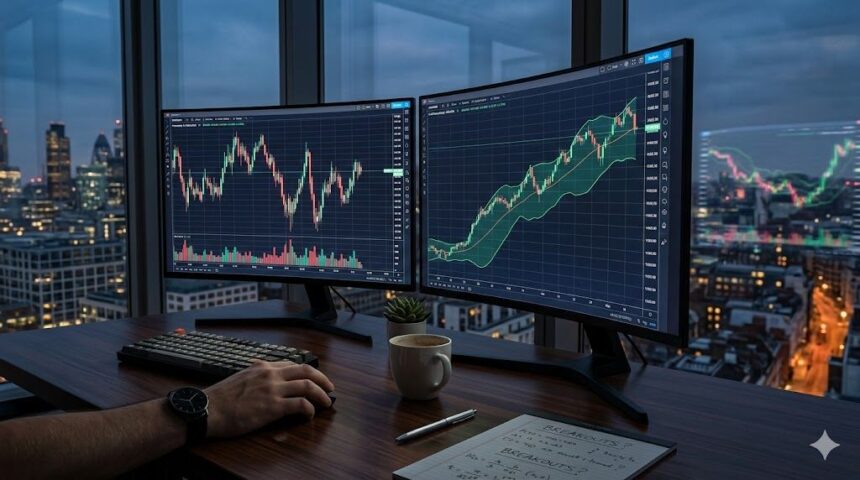
Hey guys, SamacharDesi Editorial Team here, diving deep into the pulsating heart of financial markets in 2026! As we navigate a landscape increasingly shaped by artificial intelligence, real-time data, and evolving economic shifts, understanding effective Intraday & Swing Trading Strategies in 2026 is more crucial than ever. For those looking to make informed personal finance decisions and harness the power of short-to-medium term market movements, this comprehensive guide will equip you with systematic market guidelines, verified calculations, essential risk disclosures, and data comparisons tailored for the current year.
- Understanding Intraday Trading in 2026
- Core Principles and Market Dynamics for Intraday Trading
- Top Intraday Strategies for 2026
- Essential Tools and Technologies for Intraday Trading
- Risk Management for Intraday Traders
- Mastering Swing Trading in 2026
- The Philosophy of Swing Trading
- Effective Swing Trading Strategies for 2026
- Key Indicators and Analysis in 2026
- Mitigating Risks in Swing Trading
- Navigating the 2026 Market Landscape: AI, Data, and Regulations
- Risk Disclosure and Personal Finance Guidance
- Conclusion: Empowering Your 2026 Trading Journey
The financial markets of 2026 are characterized by hyper-connectivity, rapid information dissemination, and the pervasive influence of advanced algorithms. Whether you’re aiming for quick profits within a single trading day or seeking to capture multi-day price swings, robust strategies coupled with stringent risk management are non-negotiable. Let’s unlock the secrets to successful trading in this dynamic era.
Understanding Intraday Trading in 2026
Intraday trading, often known as day trading, involves opening and closing positions within the same trading day. The goal is to capitalize on small price movements, and in 2026, this requires unparalleled speed, precision, and technological leverage. The market is more efficient, but also more volatile, presenting both opportunities and significant challenges.
Core Principles and Market Dynamics for Intraday Trading
In 2026, successful Intraday Trading Strategies 2026 hinge on several key principles:
- Volatility Exploitation: Identifying instruments with significant price swings during the day.
- Liquidity Focus: Trading highly liquid stocks, indices, or forex pairs to ensure easy entry and exit without significant slippage.
- Real-time Data Analysis: Leveraging AI-powered tools for instant sentiment analysis, news processing, and technical indicator calculations.
- Technological Edge: High-speed internet, low-latency trading platforms, and direct market access (DMA) are paramount.
Top Intraday Strategies for 2026
Here are some refined strategies designed for the 2026 market environment:
- Algorithmic Scalping: Manual scalping is extremely difficult now. Utilizing AI-driven algorithms to identify micro-trends and execute multiple small trades within seconds, targeting tiny profit margins on high volume. This demands minimal human intervention post-setup and rigorous backtesting.
- AI-Driven Momentum Trading: Instead of relying solely on traditional indicators, AI models in 2026 predict momentum shifts by analyzing order flow, social media sentiment, and intermarket relationships in real-time. Traders follow these high-probability signals for quick entries and exits.
- Automated Breakout Trading: Advanced systems automatically identify potential support/resistance levels and execute trades when prices decisively breach these levels, often fueled by sudden news events or institutional flows. Automated stop-losses and profit targets are crucial here.
- Volume-Weighted Average Price (VWAP) Trading: Utilizing VWAP as a dynamic support/resistance level. Automated systems can execute buy orders when prices dip below VWAP and sell orders when they rise above, aiming for a mean reversion.
Essential Tools and Technologies for Intraday Trading
The 2026 day trading arsenal must include:
- Advanced Charting Platforms: Offering ultra-fast data feeds, custom indicator capabilities, and multi-timeframe analysis.
- AI/ML-Powered Scanners: For real-time identification of high-probability setups based on predefined criteria.
- API Integration: Connecting personal algorithms and trading systems directly to broker platforms for automated execution.
- News and Sentiment Aggregators: AI-powered tools that filter, prioritize, and summarize market-moving news instantly.
Risk Management for Intraday Traders
Risk Management Trading is the bedrock of successful Intraday Trading Strategies 2026.
- Strict Stop-Loss Orders: Always define your maximum acceptable loss per trade before entering. Automated stop-losses are highly recommended.
- Position Sizing: Never risk more than 1-2% of your total trading capital on a single trade. Calculated via:
(Account Capital * Risk %) / (Entry Price - Stop-Loss Price) = Number of Shares/Contracts. - Capital Preservation: Prioritize protecting your capital over chasing large profits. Small, consistent gains are the goal.
- Emotional Discipline: Adhere to your trading plan without emotional interference. AI-assisted systems help reduce this human element.
Mastering Swing Trading in 2026
Swing trading aims to capture price swings that last from a few days to several weeks. It offers a balance between the high intensity of intraday trading and the long-term commitment of positional investing. In 2026, enhanced analytical tools make identifying and riding these swings more predictable, but still requires robust analysis.
The Philosophy of Swing Trading
Swing Trading Strategies 2026 are ideal for traders who:
- Cannot commit to constant real-time monitoring.
- Seek larger profits per trade than scalping, accepting wider stop-losses.
- Prefer to combine technical analysis with fundamental catalysts.
Effective Swing Trading Strategies for 2026
Refined strategies for today’s swing trader:
- AI-Predicted Trend Following: Instead of just identifying existing trends, AI models in 2026 leverage predictive analytics to forecast potential trend initiations and continuations, offering earlier entry points. Traders use indicators like ADX, moving averages, and now AI-enhanced trend strength algorithms.
- Automated Retracement/Pullback Trading: Identifying assets in a strong trend that experience temporary pullbacks to a key support level (e.g., 20-period EMA, Fibonacci levels). Automated systems can place buy/sell orders at these levels, anticipating a continuation of the primary trend.
- Dynamic Support and Resistance: Traditional support and resistance levels are static. In 2026, AI algorithms identify dynamic zones based on historical price action, volume profiles, and institutional buying/selling patterns, making them more robust.
- Event-Driven Swing Trading: Capitalizing on anticipated market reactions to corporate earnings, product launches, or macroeconomic reports. This requires careful pre-event analysis and understanding of market sentiment, often aided by AI sentiment tools.
Key Indicators and Analysis in 2026
For effective Technical Analysis 2026 in swing trading, consider:
- AI-Powered Technical Indicators: Beyond traditional MACD or RSI, new indicators integrate multiple data points to give more reliable signals.
- Sentiment Analysis: AI tools analyze news, social media, and analyst reports to gauge overall market sentiment towards an asset.
- Fundamental Catalysts: Understanding the underlying company or economic factors that can drive multi-day movements.
- Volume Profile Analysis: Identifying areas of high trading activity, which often act as strong support or resistance.
Mitigating Risks in Swing Trading
While less intense than intraday, Risk Management Trading remains critical:
- Wider Stop-Losses: Necessary to account for larger intra-day volatility and prevent being stopped out prematurely. Calculate based on average true range (ATR).
- Diversification: Avoid concentrating too much capital in a single trade or sector.
- Understanding Overnight Risk: Prices can gap up or down significantly between trading sessions due to news, which cannot be hedged easily.
- Regular Portfolio Review: Adjust stop-losses and profit targets as the trade progresses.
Navigating the 2026 Market Landscape: AI, Data, and Regulations
The year 2026 brings distinct characteristics to the trading arena.
The Rise of Algorithmic and AI Trading
Algorithmic Trading 2026 is no longer just for institutional players. Retail traders now have access to sophisticated AI tools that can:
- Execute trades with optimal timing.
- Scan markets for specific patterns and opportunities.
- Manage risk by dynamically adjusting position sizes or stop-loss levels.
- Backtest strategies against vast historical data with unprecedented speed.
However, human oversight and understanding of the algorithms’ limitations are paramount. AI assists; it does not replace critical thinking.
Data-Driven Decision Making
Access to clean, reliable, and real-time data is a competitive edge. Ensure your data feeds are from verified sources and your analytical tools can process this information efficiently to provide actionable insights for your Trading Strategies 2026.
Regulatory Environment
As Algorithmic Trading 2026 and high-frequency trading become more prevalent, regulatory bodies are continually refining rules around market manipulation, data privacy, and investor protection. Stay informed about relevant changes in your jurisdiction.
Risk Disclosure and Personal Finance Guidance
It is vital to understand that Intraday & Swing Trading involve substantial risk, including the potential loss of principal. The fast-paced nature of these activities means that significant losses can occur quickly. Our market guidelines 2026 are for informational purposes and should not be considered financial advice. Always trade with capital you can afford to lose.
Before engaging, thoroughly backtest any strategy, preferably on a demo account, and seek advice from a qualified financial advisor to align trading activities with your overall personal finance decisions and risk tolerance.
| Feature | Intraday Trading (Day Trading) | Swing Trading |
|---|---|---|
| Time Horizon | Minutes to Hours (positions closed before market close) | Days to Weeks (positions held overnight) |
| Primary Goal | Capitalize on small, frequent price fluctuations | Capture medium-term price swings within a trend |
| Risk Level | Very High (requires strict stop-loss orders) | High (includes overnight gap risk) |
| Required Capital | Significant, often with leverage (check local regulations) | Moderate to Significant |
| Time Commitment | Full-time attention during market hours | Several hours per day/week for analysis and monitoring |
| Key Tools (2026) | AI-powered algorithms, DMA, low-latency platforms, real-time news feeds | AI-enhanced technical analysis, sentiment tools, fundamental analysis platforms |
| Mental Discipline | Extreme, managing rapid decisions and losses | High, managing patience and holding through volatility |
Conclusion: Empowering Your 2026 Trading Journey
The year 2026 presents an exciting, albeit challenging, environment for traders. By understanding the core tenets of Intraday & Swing Trading Strategies, leveraging cutting-edge AI and data analysis tools, and maintaining rigorous risk management practices, you can significantly enhance your potential for success. Remember, continuous learning, adaptation, and discipline are your greatest assets in navigating the future of financial markets. Stay informed, stay strategic, and may your trading endeavors be profitable!
Frequently Asked Questions (FAQ)
Q1: How has AI fundamentally changed trading for retail investors in 2026?
A: In 2026, AI has democratized access to sophisticated analytical power. Retail investors can now leverage AI tools for predictive analytics, real-time sentiment analysis, automated trade execution, and advanced backtesting, functions once exclusive to institutional traders. This helps in identifying high-probability setups, optimizing entry/exit points, and managing risk more effectively, making trading strategies 2026 far more data-driven.
Q2: What is the most important factor for success in Intraday Trading in 2026?
A: While many factors contribute, the single most important factor for success in Intraday Trading in 2026 is undoubtedly stringent risk management. The ability to control losses through strict stop-loss orders, appropriate position sizing, and unwavering emotional discipline is paramount to protecting capital and ensuring longevity in the fast-paced intraday environment, even with the aid of advanced AI.
Q3: Can a beginner successfully implement these strategies in 2026?
A: While the advanced tools of 2026 offer assistance, trading is inherently risky and requires significant learning. Beginners should start with a robust education, practice extensively on demo accounts, begin with minimal capital, and focus heavily on risk management. It’s crucial to understand that Intraday & Swing Trading Strategies are not get-rich-quick schemes, and success comes with experience, patience, and continuous adaptation to market conditions.
Q4: How important is fundamental analysis for Swing Trading in 2026?
A: Fundamental analysis remains highly important for Swing Trading Strategies 2026, especially for trades extending beyond a few days. While technical analysis helps with entry and exit points, understanding the underlying company’s health, industry trends, and macroeconomic factors provides conviction in holding a position and helps identify potential catalysts or risks that could drive or reverse a swing. AI tools can now assist in quickly sifting through vast amounts of fundamental data.
Written by SamacharDesi Editorial Team
Official editorial intelligence team. We monitor, cross-verify, and publish high-utility reviews, guides, job alerts, and scheme parameters under strict factual verification guidelines.